
Persian-Style Carpet Washing: The Traditional Hand-Wash Method and Why It Works
A clear guide to the Persian-style hand-wash method for carpets, including soaking, rinsing, water extraction, and proper sun drying in humid climates.
CARE & CLEANING
3 min read

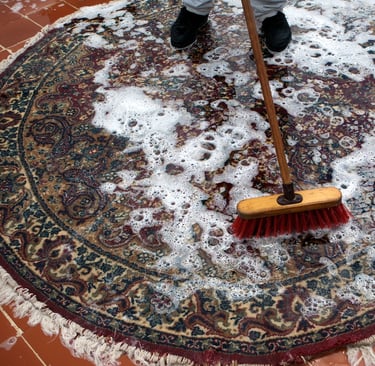
When people talk about Persian carpet cleaning, they often mean a particular way of washing: a full hand-wash that treats the carpet as a textile, not just a surface to be shampooed.
It takes more time than quick-clean methods, but it is thorough. Done properly, it lifts embedded grit, removes residue, and reduces the chance of lingering odour. That matters in humid homes, where dampness and trapped soap can hang around longer than you expect.
This guide explains the method step by step, plus the mistakes that cause most problems.
What this method is, in plain terms
A Persian-style wash is built around four principles:
Soak to loosen dirt inside the pile, not just on top
Rinse completely, so no soap stays behind
Extract water efficiently, so the carpet does not stay damp for too long
Dry fully in the sun and airflow, so odour does not return
This method is not about being fancy. It is about controlling moisture and time.
Why it matters in humid climates
In places like Singapore, the main issue is rarely dirt alone. It is dirt plus moisture.
When a carpet stays damp inside its foundation, it becomes more likely to develop:
a musty smell that keeps returning
mildew issues
rippling or curling edges
dye movement in sensitive carpets
That is why the wash and the dry matter equally.
Before you start: what to prepare
A calm wash starts with basic preparation. It prevents rushed decisions mid-way.
Mild soap suitable for textile fibres
Plenty of clean water for rinsing
Soft brush or gentle tool for agitation
A clean, flat area for controlled washing
A way to extract water (scraper method)
A drying plan with direct sun and airflow
If you do not have a realistic drying plan, postpone the wash. Drying is not a finishing step. It is half the method.
Step 1: Pre-check before any water
Before washing, check for things that water can worsen:
Loose fringe or weak edges: wet weight can pull and stress these areas
Holes or thinning spots: agitation can open them further
Colour sensitivity: some dyes react poorly to long wetting and slow drying
Backing or glue: certain constructions do not handle heavy wetting well
If you notice damage, treat it as a signal to be gentler, not a reason to scrub harder. Water adds weight. Weight adds stress. That is often how small issues become bigger ones.
Step 2: Remove dry grit first
Dry grit is abrasive. If you wash without removing it, you risk grinding it deeper while cleaning.
Vacuum slowly, with multiple passes
Vacuum both sides if possible
Avoid pulling the fringe into the vacuum
Be gentle with delicate piles
A carpet that is well-vacuumed usually needs less aggressive washing. It also rinses faster because you are not trying to flush out as much sand-like debris.
Step 3: Controlled soaking with mild soap and water
This is where the method differs from spot-cleaning culture. A proper soak loosens what is trapped deeper in the pile and foundation.
Use a mild soap suitable for textile fibres
Soak evenly so the carpet is treated consistently
Keep it controlled so weaker areas are not over-wet
A few practical points help here:
Use cool to lukewarm water, not hot water. Heat can encourage dye movement and can stress some fibres.
Use enough water to work evenly, rather than soaking one section at a time. Patchy wetting often leads to patchy drying, which is where tide marks start.
Let the soap do the work. Strong chemical cleaners can remove more than dirt, including the softness of wool and the clarity of colour.
Step 4: Gentle agitation, along the pile
The aim is to lift dirt without roughing up the fibres.
Work in the direction of the pile
Focus on traffic lanes and darker areas
Avoid harsh brushes that fuzz the surface
With textiles, more force is rarely better. If you find yourself needing a lot of force, it usually means one of two things: the carpet was not vacuumed thoroughly, or it needs more soaking time before agitation.
Step 5: Rinse until the water runs clear
Rinsing is the most underestimated part of washing.
Soap residue can leave a carpet feeling stiff and can attract dirt faster later. In humid weather, residue can also contribute to a sour or “not quite fresh” smell that comes back after a few weeks.
A good mental model is this: if soap stays in the carpet, the carpet never truly feels done.
To rinse well:
Rinse multiple times, not once
Pay attention to areas where feet usually land, because they hold more oils and residue
Keep rinsing until the water looks clear and the carpet does not feel slick
Step 6: Water extraction with a scraper
The aim is to lift dirt without roughing up the fibres.
Work in the direction of the pile
Focus on traffic lanes and darker areas
Avoid harsh brushes that fuzz the surface
With textiles, more force is rarely better. If you find yourself needing a lot of force, it usually means one of two things: the carpet was not vacuumed thoroughly, or it needs more soaking time before agitation.
Tabriz Carpets
Warehouse-style carpet shop in Tampines, Singapore.
Handmade and machine-made carpets for real homes, with in-house cleaning and repair.
Shop Carpets
© 2026 Tabriz Carpets. All rights reserved.
Services & Company
Visit Us
Tabriz Carpets
Blk 9002 Tampines St 93, #02-30, S528836
Opening hours:
Sun – Sat: 10.00am – 6.30pm